
Not every system function carries the same level of risk. Functional Risk Assessment helps organizations identify critical business processes, evaluate potential system risks, and determine validation activities that are proportionate to the impact on product quality, patient safety, and data integrity.
Understanding Risk Before Validation
An effective validation strategy begins with understanding where risks exist and how they may affect regulated operations. Applying the same validation effort to every system function can increase project complexity without improving compliance.
AiZen Algo helps organizations perform structured Functional Risk Assessments by evaluating system functionality, intended use, business impact, and potential failure scenarios. Our risk based approach enables validation activities to focus on areas that matter most while supporting regulatory expectations and efficient project execution.
Service Inclusions
System Criticality Assessment
Evaluate system functionality, intended use, and business impact to determine the overall criticality of computerized systems.
Functional Risk Analysis
Identify potential risks associated with system functions, business processes, and GxP operations using structured risk assessment methodologies.
Risk Evaluation & Prioritization
Assess the likelihood, severity, and detectability of identified risks to establish appropriate validation priorities.
Risk Control Recommendations
Define mitigation strategies, system controls, testing requirements, and procedural improvements to reduce identified risks.
Validation Planning Support
Use assessment outcomes to establish a risk based validation strategy, qualification scope, and testing approach.
Delivery Approach
Every Functional Risk Assessment follows a structured methodology that supports informed decision making and risk based validation planning.
Identify
Define system scope, intended use, and critical business functions.
Analyze
Evaluate functional risks, process dependencies, and potential failure scenarios.
Assess
Determine risk levels based on business impact, product quality, patient safety, and data integrity.
Mitigate
Recommend appropriate controls, validation activities, and risk reduction measures.
Validate
Support risk based validation planning with documented assessment outcomes.
Compliance Framework
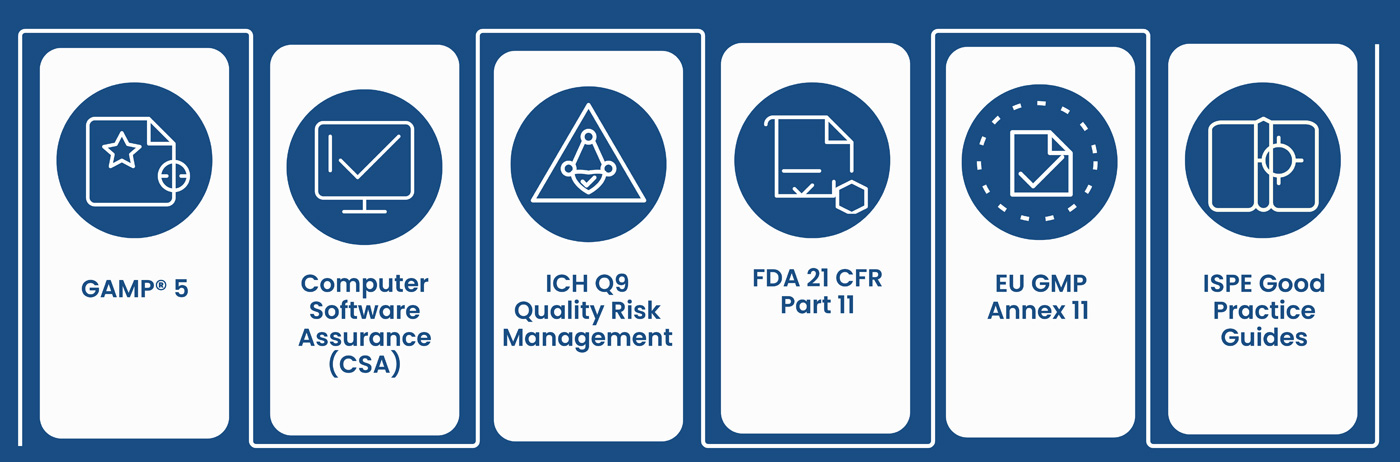
Our Functional Risk Assessment methodology aligns with globally recognized regulations and industry guidance for risk based validation.
Supported Platforms
Our Functional Risk Assessment services support a broad range of GxP computerized systems across regulated operations.
- Quality Management Systems (QMS)
- Laboratory Information Management Systems (LIMS)
- Document Management Systems (DMS)
- Manufacturing Execution Systems (MES)
- Electronic Batch Records (EBR and eBMR)
- Enterprise Resource Planning (ERP)
- Electronic Laboratory Notebooks (ELN)
- Laboratory Instruments and Analytical Systems
- Custom GxP Applications